Riding Lessons at Palladia
We offer lessons for brand-new students through advanced riders, with an emphasis on strong foundations of horsemanship.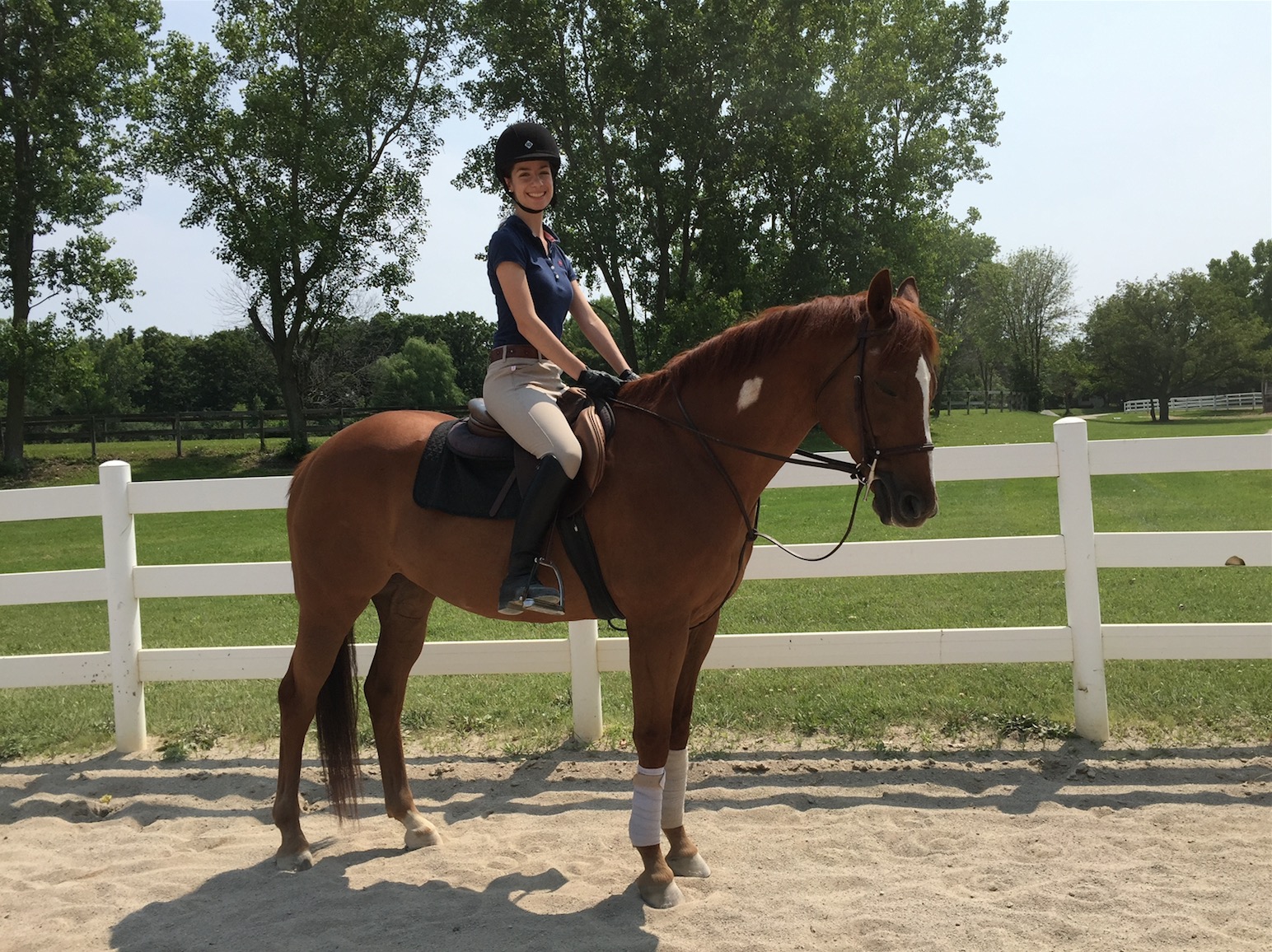
30-Minute Private Riding School Lessons: $95 each
(includes horse rental and instruction)
Whether it’s your first time on a horse or you’re looking to advance your riding skills, lessons at Palladia will help you become a better rider. Lessons are available to riders who don’t own their own horses through our Riding School. Each lesson is tailored to your level of comfort, riding experience, and goals.
At Palladia, we believe that horseback riding and competition create more than just good riding skills. Working with horses creates trust, patience, and dedication. The relationships you’ll build with other students, your trainers, and the horses themselves will also teach you sportsmanship and teamwork.
Riding School lessons are offered Tuesday-Sunday. To request a tour or a trial lesson, please email scheduling@palladiafarm.com and we’ll be in touch soon. Make sure you check out our riding gear list, below, so you know what equipment you need before you ride.
What to Wear to your Riding Lesson
While riding boots and riding pants may be fashionable, they need to be functional if you’re actually going to ride a horse. In order to be safe while riding, you need to wear a shoe or a boot with a low, flat heel and an ASTM/SEI approved riding helmet. Actual paddock boots, gloves and half chaps are optional, but recommended and preferred by most riders.
Below you’ll find a list of equipment that is required and/or recommended. If you have any questions about equipment, please email us.
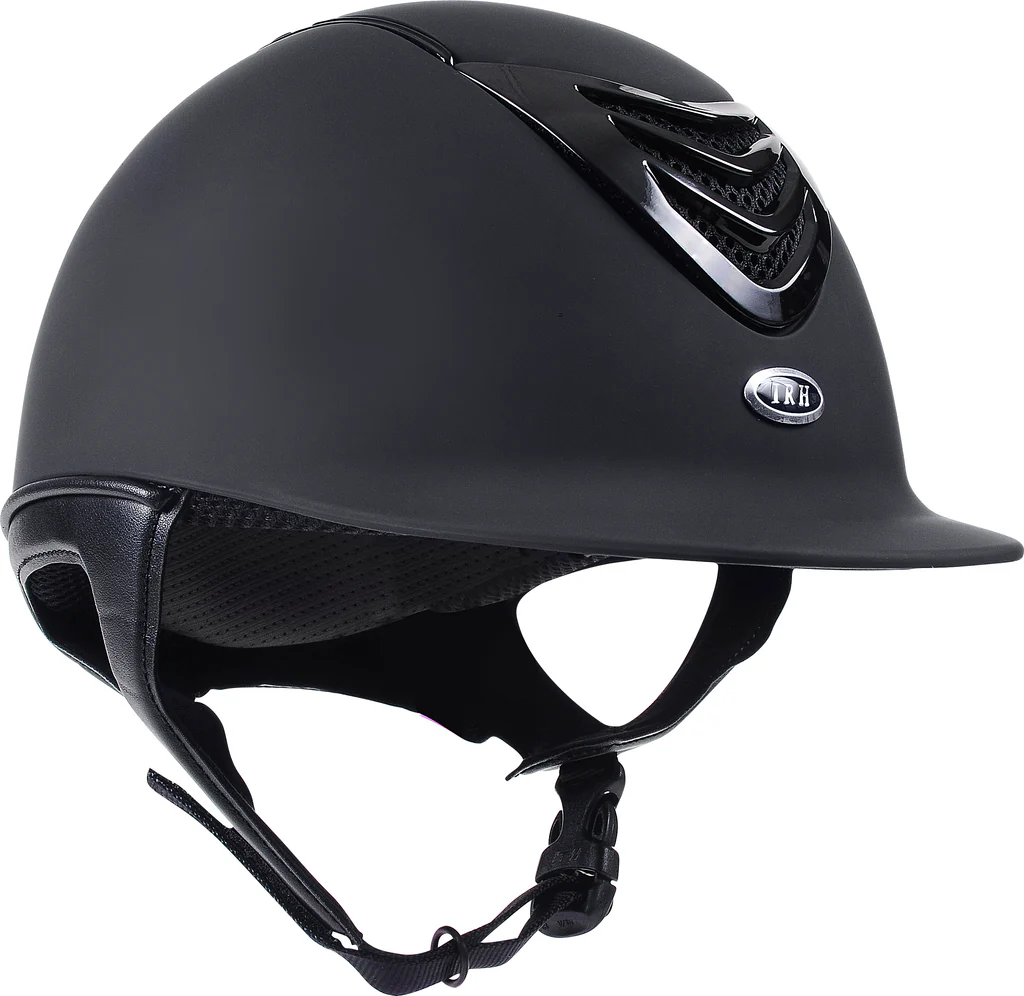
ASTM/SEI Approved Riding Helmet
A properly fitting, ASTM/SEI approved riding helmet is mandatory, because your safety while riding is our number one priority. The better a helmet fits, the more protection you have in the event of a fall from the horse. You can buy an approved helmet at Dover Saddlery (located off of IL-137 in Libertyville) and at Saddlers Row in Lake Zurich, IL. You cannot buy a riding helmet online, as having an expert confirm its correct fit is crucial to your child’s safety. When buying a helmet, look for an “ASTM/SEI” tag inside of the helmet, which guarantees its function as protective headgear and not just as a decorative headcovering. You cannot ride at Palladia with helmets designed for other sports.
If you’re curious, we’ve written an article about why we don’t provide riding helmets.
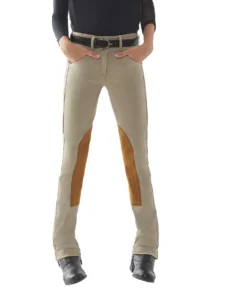
Long Pants, Jodphurs or Breeches
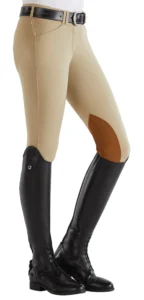
Thin or baggy pants quickly bunch up between your leg and the saddle, creating painful rubs. Special riding pants are designed to avoid this discomfort. Jeans are acceptable and will provide a measure of comfort, but they are prone to chafing and the heavy inseam is often uncomfortable. Other options include thicker leggings or jeggings, provided they are slim fitting and free of any rough inseams. You can find inexpensive breeches or jodhpurs at Dover, Saddlers Row, and many other stores online. Buy jodhpurs and paddock boots (pictured left) for children; get breeches and tall boots for adults.
Heeled Boots
Boots designed for equine activities and are the preferred equipment for riders. They provide the best protection for the feet as well as the most comfort while riding. Their appropriate heel, reinforced sole, and protected toe ensure security while riding and safety while working with the horses on the ground. They can be purchased online, from Dover Saddlery, and from Saddlers Row. Buy jodhpurs and paddock boots for children; get breeches and tall boots (pictured left) for adults.
Shirts and Jackets
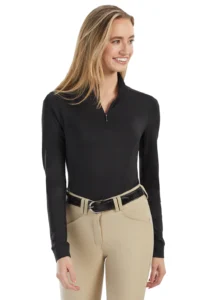
Form fitting shirts and jackets are always best. Over-sized clothing makes it difficult for the trainer to determine whether the rider’s position is correct and effective. Riding is similar to gymnastics, where posture and balance are extremely important. In winter, heavier clothing may be necessary, but please try to wear more fitted items.
Furthermore, please ensure that you are fully covered; do not show cleavage, midriffs, or behinds while you ride. Prohibited clothing includes, but is not limited to: tank tops, off-the-shoulder tops, crop-tops, and excessively low-rise pants. We will not teach anyone who is dressed inappropriately for riding.
Hair
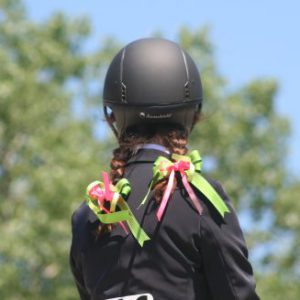
Long hair should be pulled back into a braid so that the rider can have good use of their peripheral vision, and so that the trainer can see the rider’s facial expression. Low ponytails located at the base of the neck will not affect the fit of the helmet.